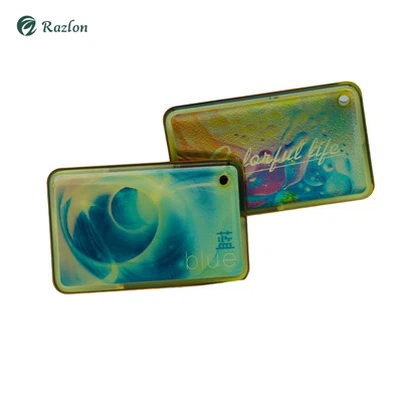
Full Edge Epoxy RFID Tag
An RFID key tag with a Full Edge Epoxy is a compact microchip capable of wirelessly transmitting and storing data using radio frequency signals. These key tags are designed with PVC material sealed along the edges to prevent fraying, ensuring enhanced durability. The sealing process can be...
Description
An RFID key tag with a Full Edge Epoxy is a compact microchip capable of wirelessly transmitting and storing data using radio frequency signals. These key tags are designed with PVC material sealed along the edges to prevent fraying, ensuring enhanced durability. The sealing process can be accomplished through techniques like heat-sealing or the application of a clear adhesive. For crafting and DIY projects, individuals often use the term "dripping glue" to describe the controlled release of adhesive from an applicator tip. This process helps regulate the amount of glue applied. RFID key tags, on the other hand, are small electronic devices incorporating a unique identifier. They can transmit data wirelessly by utilizing radio waves.
Full edge epoxy RRID key tags are utilized in a range of applications, including inventory management, access control, and payment systems, where identification and tracking are essential. These tags are composed of an antenna and a microchip that contains a unique identifier code. When an RFID reader is in proximity to the tag, it receives data from the tag through radio waves, enabling seamless identification and tracking. The efficiency and accuracy of RFID technology have led to its growing popularity in asset and inventory management.

The production of full edge epoxy key tags is more complex compared to regular epoxy key tags due to the increased process requirements. The shape of the glue needs to be precisely tooled in order to properly adhere to the key tag shape, resulting in higher production costs for the key tag.
The RFID key tag with a full edge offers a pleasant tactile experience due to its smooth and durable surface.
This chart presents the sequential process of how an order is placed and shipped. Let me rearrange the content to generate a highly similar text based on the original information.
The chart illustrates the step-by-step procedure starting from placing an order to shipment.

Products Details
|
Material: |
ABS, PVC+epoxy, or 3M sticker |
|
Size: |
25MM/28MM/30 dia, /Custom |
|
Thickness: |
3.5MM/Custom |
|
Printing: |
Offset, Silk screen, Digital Printing; |
|
Chip: |
Custom/None LF/HF There are various types of RFID chips available in the market such as AT5577, TK4100, NXP Mifre 1K, 4K, Ultralight, Desfire 2k, 4k, 8k, Ntag 213, Ntag 216, FM1108, and FMS70. Each type of RFID chip has its own unique specifications, features, and benefits, making it suitable for different applications. |
|
MOQ: |
Sample Card/100pcs |
|
Card Surface: |
Glue |
|
Printing: |
Digital Printng/ Offset/ Silk Screen |
|
Crage: |
Glue process |
|
Finished: |
Sling and hole and packed |
|
Lead time: |
Normally 5-7days after approval the artwork |
|
Package: |
200/250pcs per box; 2500/3000pcs per carton |

And there is the fastest and the cheapest logistics for you!
Beautiful and variable designs and the fastest lead time can make your card easier and more efficient. Save time! Save cost! Welcome to everyone who wants to do card business!!
FAQ
Q: What is the full edge epoxy RFID key tag?
A: We will drop the glue on the key tag with full edge, additional edge glue will be done on the RFID key tag.
Q: What is the lead time for full edge epoxy RFID key tags?
A: As usual the lead time is 9-12 days for 5000pcs of epoxy cards. If over 5000pcs, it takes around 12-15 days.
Q: How many glue dispensers do you have?
A: We have four glue dispenser machines, and the daily capacity is 100,000pcs of epoxy key cards, and we also have 500 sets of full edge epoxy tool. It is the biggest capacity for epoxy cards in the current manufacturer.
Hot Tags: full edge epoxy rfid tag, China full edge epoxy rfid tag manufacturers, suppliers, factory
Send Inquiry
You Might Also Like